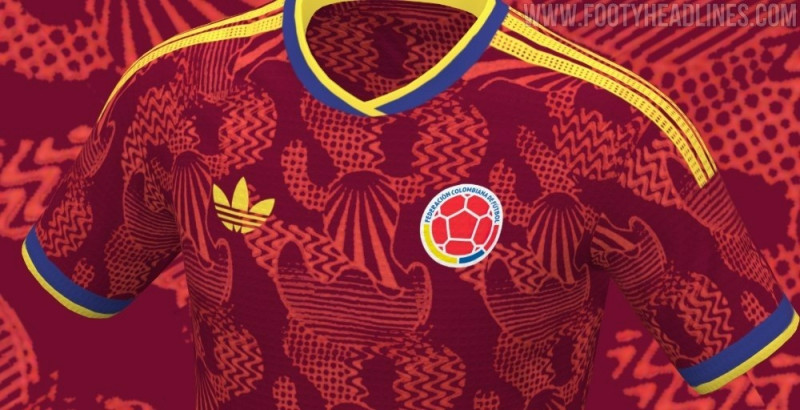
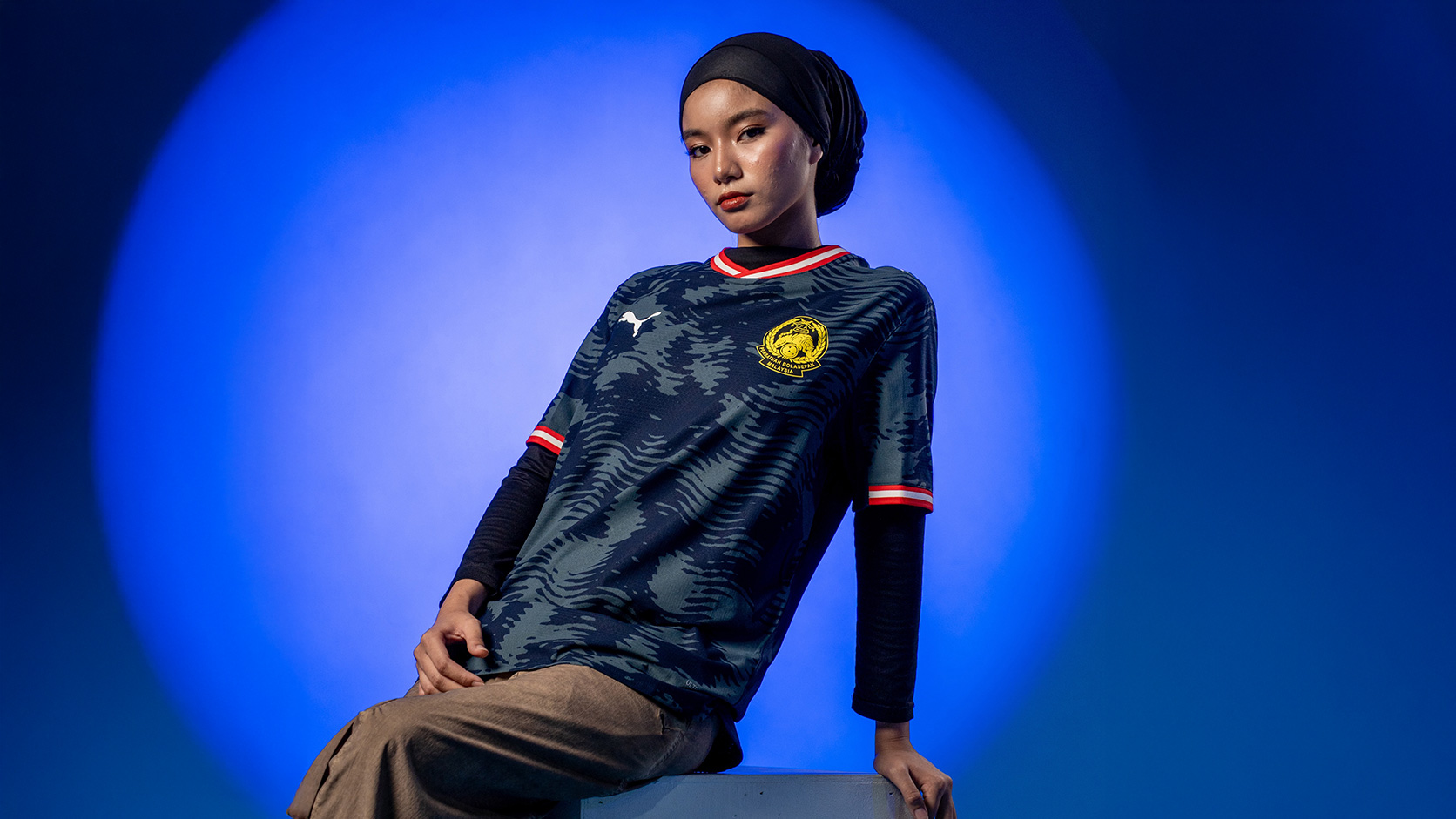
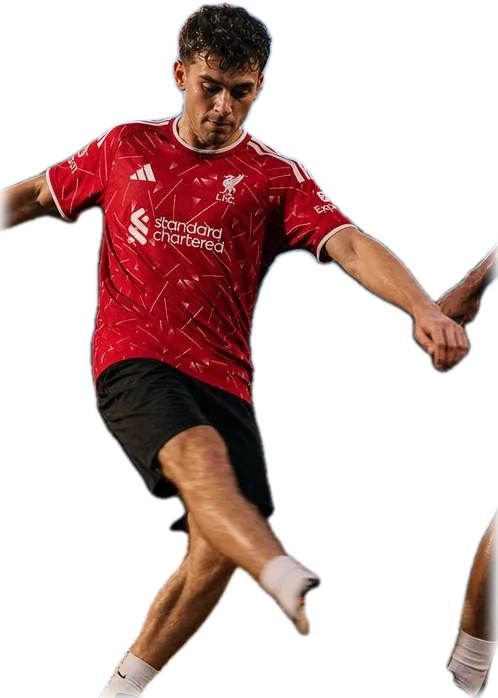
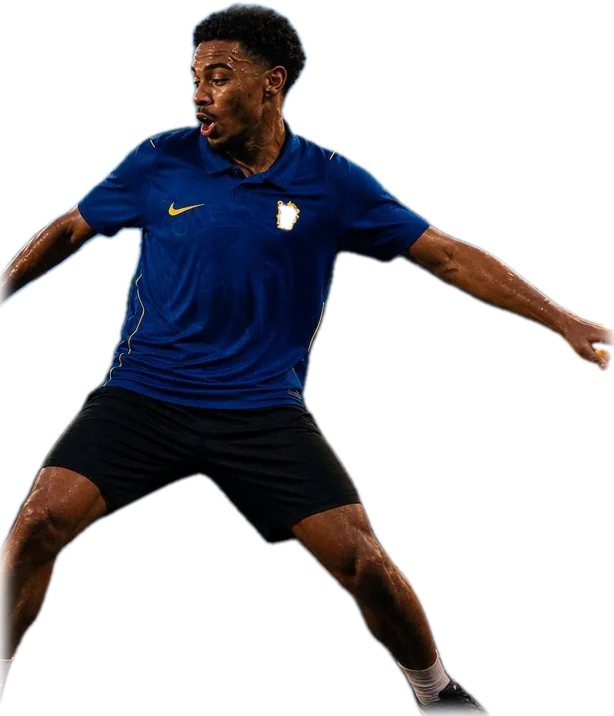
Shirt Archive sells football shirts and football kits across two ranges. The first is new: this season's new 26/27 kits for clubs and national teams, in adult, women's and kids sizes, home, away, third and goalkeeper. The second is retro football shirts and vintage football shirts from the seasons football dressed best.
Both ranges are catalogued the same way. Every shirt is photographed, measured in centimetres and given a reference — club or nation, year, kit type — which appears on the listing, on the photographs and on the packing slip. A 26/27 away kit is recorded exactly as carefully as a 1990 one, because in ten years that is what it will be.
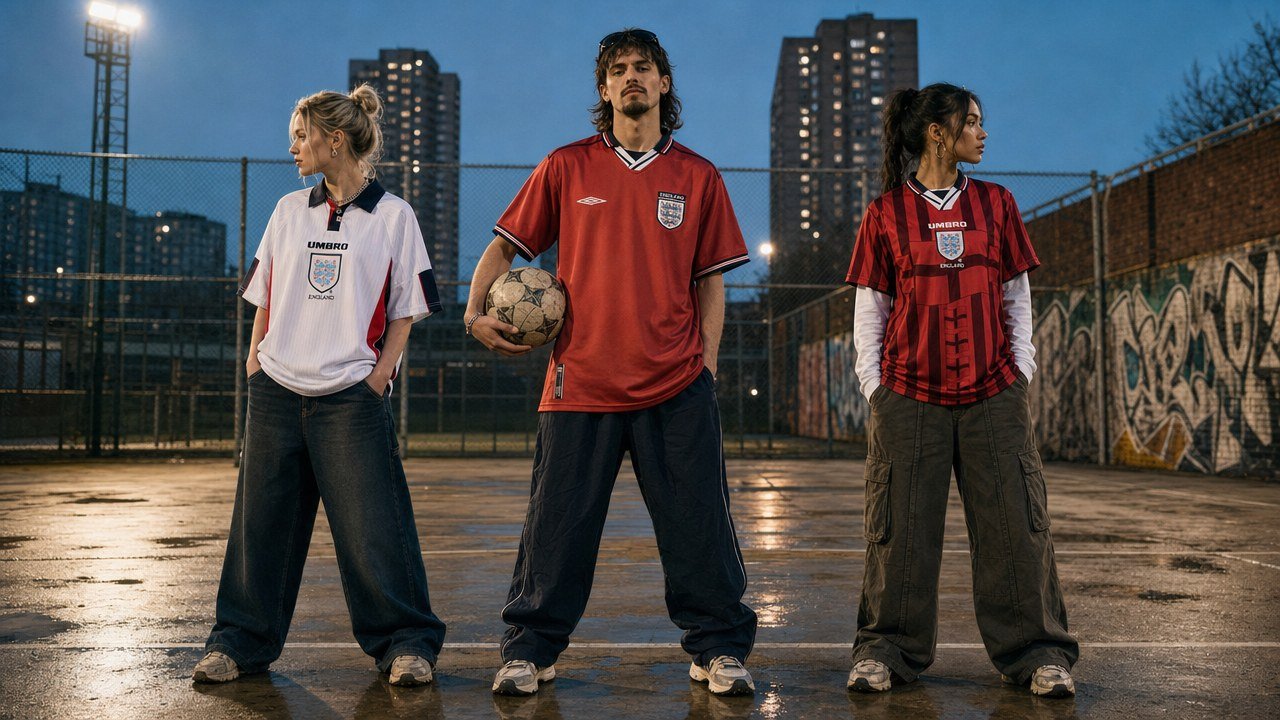
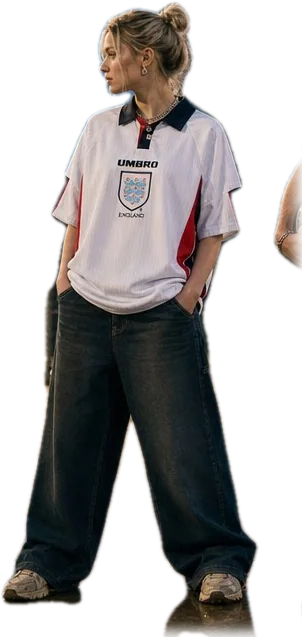
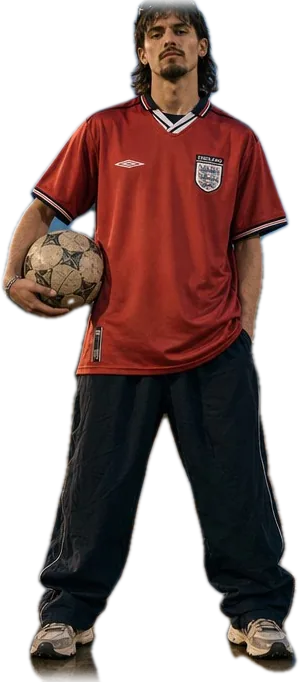
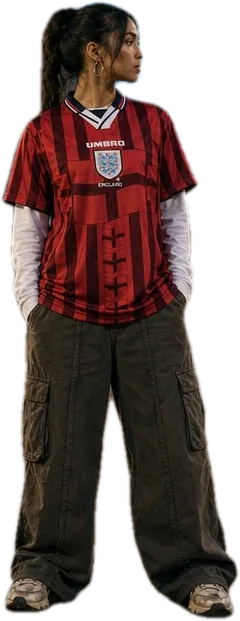
New stock covers the Premier League, the Scottish Premiership, the major European leagues and the international sides, refreshed as kits are released through the season. The retro range leans towards the late 1980s to the mid-2000s — boxy Umbro and adidas cuts, sublimated patterns, sponsors sized without restraint. England and Scotland run deepest across both.
Retro, vintage, replica, reissue — the words mean different things
They get used interchangeably and it costs people money. Vintage football shirt generally refers to a garment from the period itself. Retro football shirt is used the same way in casual speech, but the trade also applies it to modern reissues of old designs — which is why the word alone tells you very little. Read what a listing actually says rather than the category it sits in.
A replica football shirt is not a lesser thing. In football retail, replica is the standard trade term for the fan-version shirt sold to the public, as distinct from the authentic or player-issue version made to match specification for the squad. Both are licensed. The replica has a looser cut and heavier fabric; the player issue is tighter, lighter and usually carries different construction at the collar and cuff. A reissue is a modern manufacture of an old design, sold new by the brand. A match-worn shirt was worn in a fixture; match-issued was prepared for a player but not necessarily used. Provenance separates the last two, and provenance is worth more than the shirt.
Shirt, kit or full strip — what you are actually buying
The words get used loosely. A football shirt is the shirt on its own, which is what most listings are and what most people want. A football kit usually means shirt, shorts and socks together — standard for kids, less common for adults, and always stated explicitly on the listing rather than implied by the word.
Home, away, third and goalkeeper are separate products, not variants. Most clubs run a home and an away every season, a third in most seasons, and a goalkeeper shirt that is often produced in far smaller numbers than the outfield ones. Long-sleeve versions exist for many shirts and are listed separately where we hold them. Where a shirt is sold with shorts and socks, the listing says so in the title and the price reflects the full set.
Sizing — the single biggest cause of returns
Vintage shirts run large, and 1990s shirts run very large. A 1994 Large is roughly a modern Medium. The cut was deliberately boxy: wide through the body, short in the sleeve relative to the chest, and designed to be worn over a base layer in a colder game than we play now. A shirt that fits a modern 42-inch chest on paper will hang off the same person in a 1996 cut.
Ignore the label. Every listing carries measurements in centimetres — pit-to-pit taken flat, length from the collar seam to the hem, and sleeve from the shoulder seam. Lay a shirt you already own flat, measure it the same way, and compare the numbers. That is the only reliable method, and it takes ninety seconds.
How to check a football shirt before you buy
Copies have improved and the obvious tells are mostly gone. What remains is construction. Check the collar first — period ribbed collars are knitted as a separate piece and attached with a clean interior seam; cheaper copies often use a folded strip of body fabric. Check the tag typography: brands changed their neck labels regularly, and a 1994 shirt carrying a 2004 Umbro tag is not what it claims to be. Wash-care labels carry country of manufacture and codes that should match the period.
Look at stitch density around the crest and sponsor. Period embroidery is dense and slightly uneven; modern reproduction is uniform and flat. Sponsor print on a 1990s shirt should show its age — fine cracking under a stretch is normal and a print that looks perfect on a thirty-year-old shirt deserves suspicion. Finally, price. A genuinely rare shirt at a third of the going rate is not a bargain, it is an answer.
What makes a shirt worth keeping
Four things, roughly in order. Tournament association — a World Cup or European Championship shirt outperforms a league season every time, which is why the 1990 and 1996 England shirts do what they do. The player — Maradona in 1986, Gascoigne in 1990, Bergkamp in an Arsenal shirt in 1998. Scarcity — goalkeeper and third kits were made in far smaller runs than home shirts, and third kits from the 1990s are among the hardest to find at all.
And the design itself. The years between roughly 1988 and 1998 were the last period in which kit design was genuinely allowed to be strange — sublimated patterns, sponsors sized without restraint, colourways nobody would sign off now. The Netherlands 1988 shirt and the Scotland 1994 away are collectible because they are good objects, independent of who wore them.
Looking after one
Wash cold, inside out, on a gentle cycle, and never with fabric softener — it degrades printed graphics and clogs technical fabric. Do not tumble dry. Dry flat rather than on a hanger, which keeps the shoulders from stretching. If it needs pressing, iron inside out and keep the plate away from sponsor, crest and any printed name entirely.
For storage, flat and dark beats hanging. Hangers stretch the shoulders over years, and sunlight fades reds and yellows faster than anything else. Acid-free tissue between folds is worth the small cost on anything you consider a keeper.
Do you stock kids and women's sizes?
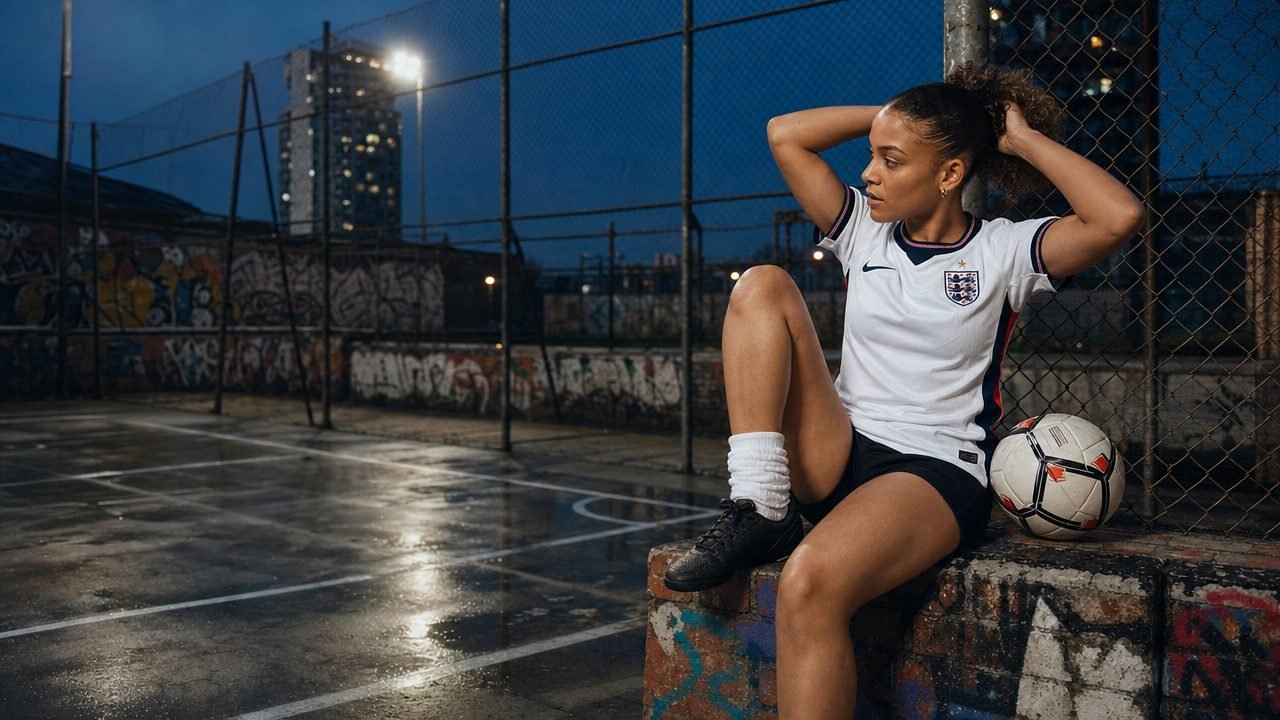
Yes, across the new range. Kids kits run from infant through to junior XL and are usually sold as shirt, shorts and socks together rather than shirt alone. Women's fit shirts are a different cut to the men's replica — shaped through the waist with a narrower shoulder — and are listed separately rather than as a size option, because they are not interchangeable. Both carry the same measurements table as everything else on the site.
How do vintage sizes compare to modern ones?
They run large. A 1990s Large is roughly a modern Medium. Every listing carries a "fits modern [size]" note and a measurements table in centimetres — pit-to-pit, length and sleeve. Measure a shirt you already own and compare against those numbers rather than trusting the label.
How is each shirt described?
Every listing states the club or nation, the season, the kit type — home, away, third or goalkeeper — the maker, the available sizes and flat measurements in centimetres. Where a shirt is a replica, a player-issue cut or a reissue, the listing says so in the title rather than in the small print. If anything is unclear, ask before you buy.
What does the catalogue reference mean?
Every shirt gets one, in the form ENG · 1990 · H — nation or club, year, then H for home, A for away, 3 for third, GK for goalkeeper. It appears on the listing, the photographs and the packing slip, and it is how we refer to the shirt in any correspondence.
How many of each shirt do you have?
Most listings are a single item in a single size — the quantity shown on the listing is what exists. When it sells the listing stays up marked sold, so the catalogue record survives and the reference stays valid. Where we hold multiple sizes of the same shirt, each size is listed separately with its own measurements.
How long does delivery take?
Every order is tracked as standard and takes 7–14 days from order to delivery, the same everywhere. Delivery is free over £30 to every country, otherwise £3.95 — we do not use untracked airmail on anything, because a vintage shirt that goes missing cannot be replaced from stock. Everything is packed flat between card, never stuffed folded into a mailing bag, and personalised orders add one to two working days before dispatch.
Can I return a shirt?
Fourteen days from delivery, for any reason, provided it comes back unworn and with any tags still attached. If a shirt is not as described the return postage is on us. Personalised items are the exception — once a name and number are applied we cannot resell the shirt, so those are final unless the item itself is faulty.
What is the difference between a replica and a player-issue shirt?
A replica football shirt is the fan version sold at retail — looser through the body, heavier fabric, standard collar construction. A player-issue shirt is made to squad specification: slimmer cut, lighter and more technical fabric, and usually different construction at the collar and cuffs. Replica is the standard trade term for the retail version, and it is what most people mean when they buy a football shirt.
Do you print names and numbers?
Yes, in the correct font for the season rather than a modern house style. We hold current league and tournament lettering as well as period sets — Umbro block, Lega Calcio, Premier League and the main international tournaments. Squad numbers are applied as issued, or choose your own name and number. Personalised items are non-returnable unless the shirt itself is faulty.
How do you source your shirts?
Private collections, collector groups, house clearances and overseas resale markets — Japanese auction sites in particular carry European shirts that never circulated widely in the UK. Shirts are photographed here before listing, so what you see is the shirt you receive rather than a stock image.
What if a shirt arrives not as described?
Tell us within fourteen days and return postage is on us, refund included — that covers the wrong item, a size that does not match the measurements we published, or anything that arrives damaged in transit. If it is simply not the fit you wanted, the standard fourteen-day return applies and the outbound postage is not refunded.
Do you ship outside the UK?
Yes, worldwide, tracked. Rates are calculated at checkout. Customers outside the UK are responsible for any import duty or local tax — these are not included in the price shown and we cannot estimate them, as they vary by country and by declared value. We declare accurately on every parcel.
Do you buy shirts?
Yes. Send photographs of the front, back, collar and tags, along with the measurements, and we will make an offer. We are most interested in pre-2005 shirts and in anything unusual — goalkeeper shirts, third kits and long-sleeve versions are always harder to come by than home shirts.






 LIMITED STOCK
 LIMITED STOCK
 LIMITED STOCK
 LIMITED STOCK
 LIMITED STOCK
 LIMITED STOCK
 LIMITED STOCK
 LIMITED STOCK
 LIMITED STOCK
 LIMITED STOCK
 LIMITED STOCK
 LIMITED STOCK
 LIMITED STOCK
 LIMITED STOCK
 LIMITED STOCK
 LIMITED STOCK
 LIMITED STOCK
 LIMITED STOCK
 LIMITED STOCK
 LIMITED STOCK
 LIMITED STOCK
 LIMITED STOCK
 LIMITED STOCK
 LIMITED STOCK




























 27 September 2026