NEW SEASON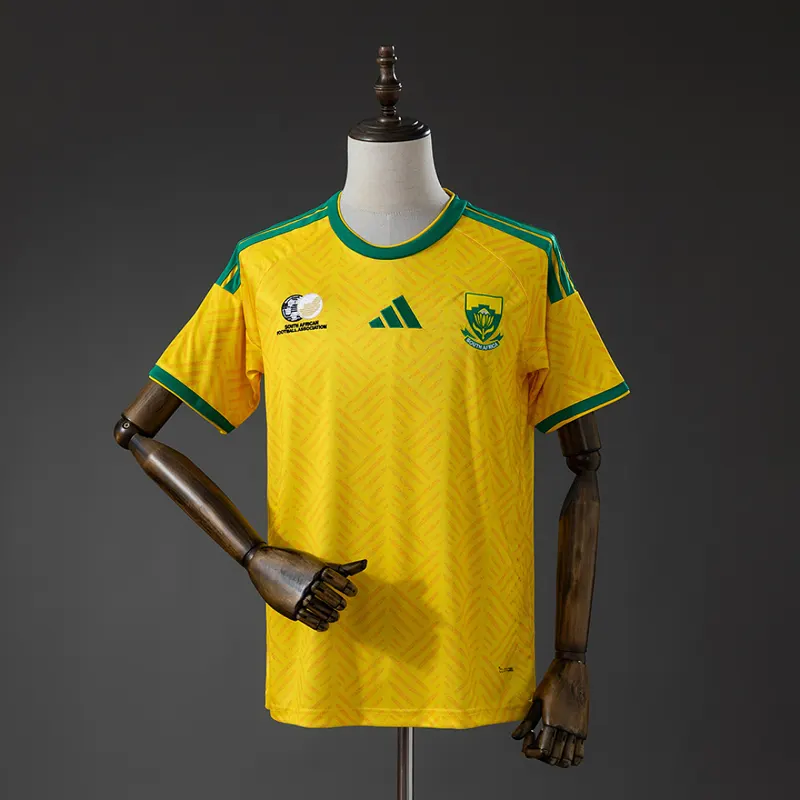
South Africa Home Shirt 2026
£44.99

South Africa tops in yellow and green, filed season by season for Bafana Bafana. The range covers African champions in 1996 and the shirts of Benni McCarthy. Hosting the 2010 World Cup. The range runs 1994 to 2026, 3 retro tops alongside the new season, from £40.99. Home and away kits, plus player-version fits and kids kits. Every listing states the season and the kit type, and printing uses the correct font for the year.
Browse South Africa football shirts and kits — Bafana Bafana in yellow and green, the side that won the Africa Cup of Nations on home soil in 1996, four years after readmission to international football, and hosted the first World Cup on African soil in 2010. Home and away shirts from 1994 through to the current 2026 range, with retro seasons and kids kits.
Every listing states the season, the kit type, the available sizes and whether it is a standard or player-version cut, in the title rather than the small print. Flat measurements in centimetres on every listing so you can check against a shirt you already own.
New and recent kits from £42.99, retro from £47.99 and player-version cuts from £52.99 — roughly half of what official stores charge for a single current-season shirt, across every season we hold. Buy any two shirts and the third is free.
Free delivery on orders over £30, tracked as standard, worldwide — free over £30 to every country, otherwise £3.95. Thirty days to return anything unworn with tags attached.
The latest kits — home, away and third.
£44.99
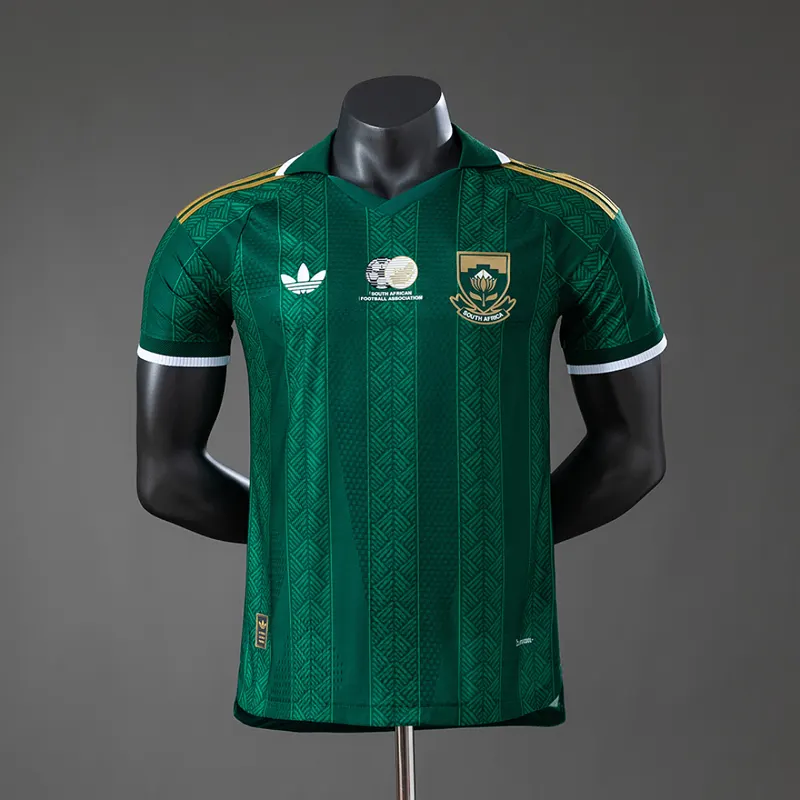
£53.99
Listed by season. These run large — read the measurements.

£49.99

£50.99
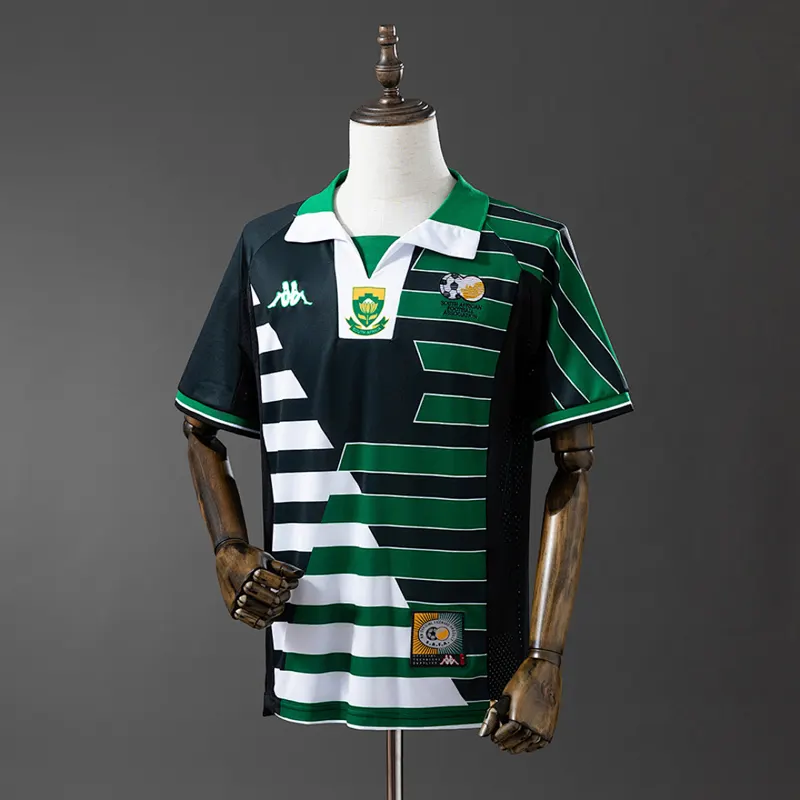
£49.99
Junior sizes and infant kits, stated per listing — shirt only or full kit with shorts and socks.
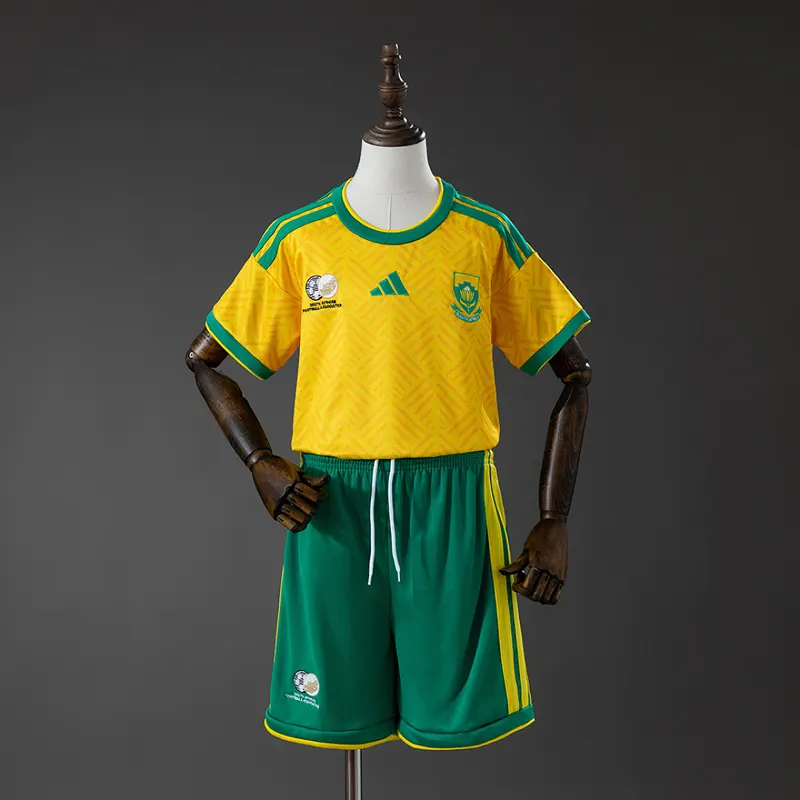
£40.99

£44.99
Bafana Bafana wear yellow and green, and few national teams have changed maker as often: Kappa through the 1990s, adidas from 1999 to 2010 — covering the home World Cup — then Puma, Nike from 2014 to 2018, Le Coq Sportif from 2020 to 2024, and adidas again since 2026. The supplier alone dates a South Africa shirt to within a few years.
The history is compressed into a remarkable stretch. Readmitted to international football in 1992 after decades of apartheid-era isolation, South Africa won the Africa Cup of Nations on home soil in 1996 at their first attempt, then hosted the first World Cup on African soil in 2010 — opened by Siphiwe Tshabalala’s goal against Mexico. The World Cup debut came in between, at France 98, where Benni McCarthy scored the country’s first World Cup goal in the draw with Denmark — which is what the 1998 shirts in this range are from.
Our South Africa range runs from 1994 to the current 2026 kits — home and away shirts, retro-weighted, with kids kits alongside.
New-season kits run close to standard European sizing, so take your usual size. Shirts from the 1990s and early 2000s were cut wider through the body and shorter in the sleeve relative to the chest; as a general rule in the vintage trade they fit about one size smaller than the label suggests, though it varies by manufacturer and year.
Do not rely on the label. Every listing carries flat measurements in centimetres — pit to pit, length, sleeve. Lay a shirt you already wear flat, measure it the same way and compare the numbers. It takes about ninety seconds and it is the single biggest cause of returns when people skip it.
Some shirts are listed as player version. That is the squad specification rather than the retail cut: slimmer through the body, lighter and more technical fabric, and different construction at the collar and cuff.
The standard cut is the retail fan version — roomier, heavier fabric, and what most people are looking for. If you intend to wear the shirt rather than play in it, take the standard cut.
Names and numbers are applied in the font issued for that season rather than a modern house lettering. This cannot be undone once applied, which is why we hold period fonts rather than defaulting to one style.
Squad numbers are applied as issued, or send your own name and number. Printing is free and adds one to two working days. Printed shirts cannot be returned unless the shirt itself is faulty — if you are unsure of the size, order it plain, check it against the measurements, and we will print it afterwards for the same price.
Free delivery on orders over £30, otherwise £3.95 tracked, arriving in two to 7–14 days from order to delivery, UK and international. Free over £30 to every country, otherwise £3.95 tracked; customers outside the UK are responsible for any import duty or local tax.
Thirty days to return anything unworn with tags still attached. If it arrives damaged or is not what the listing described, we cover the return postage.
New-season kits run close to standard European sizing, so take your usual size. Shirts from the 1990s and early 2000s generally fit about one size smaller than the label suggests. Every listing has flat measurements in centimetres — measure a shirt you already wear across the chest, one inch below the armhole, and compare against the pit-to-pit figure.
The standard cut is the retail fan version: roomier through the body, heavier fabric, standard collar construction. The player version is made to squad specification — slimmer, lighter, more technical fabric and different collar and cuff construction. If you plan to wear it rather than play in it, take the standard cut.
Yes. Official stores remove a season as soon as the new kit launches and the big retailers clear their stock shortly after. We keep recent past seasons listed in the same sizes and with the same printing options as current stock.
Yes, free, in the correct font for the season. Squad numbers as issued, or your own name and number. Adds one to two working days. Printed shirts are non-returnable unless the shirt itself is faulty.
Free on orders over £30, otherwise £3.95 tracked. Allow 7–14 days from order to delivery. Free over £30 to every country, otherwise £3.95 tracked.
Thirty days from delivery, unworn and with any tags still attached. If it arrives damaged or is not as described, return postage is on us. Printed shirts are final unless the shirt itself is faulty.
By the maker, mostly. Kappa covered 1992 to 1998, adidas 1999 to 2010 including the home World Cup, Puma 2011 to 2012, Nike 2014 to 2018, Le Coq Sportif 2020 to 2024, and adidas returned in 2026. Few teams have switched so often, which makes the badge on the chest unusually informative. Every listing here states the season outright.